| |
Subterranean termites or "white-ants" are
a highly destructive timber pest, causing major structural timber damage
to both domestic and commercial buildings in the Raymond Terrace Port
Stephens Area.
FUMAPEST
Raymond Terrace Pest Control has more than 45 years practical
experience in protecting buildings in Raymond Terrace Port Stephens
Area from
termite infestations. For your protection phone
1300 241 500
to arrange for a thorough FUMAPEST inspection and report to Australian Standard
3660.
A major economic pest: Recent industry surveys
suggest about one third of all unprotected properties in NSW are subject
to attack by subterranean termites. Most of the latest technology for
termite control products comes from the USA where termite control is a
US$5 billion industry.
Most homes are at risk in the Raymond Terrace Port
Stephens Area - particularly in built-up urban areas or where well
established gum trees are within a 100 metre radius of the building.
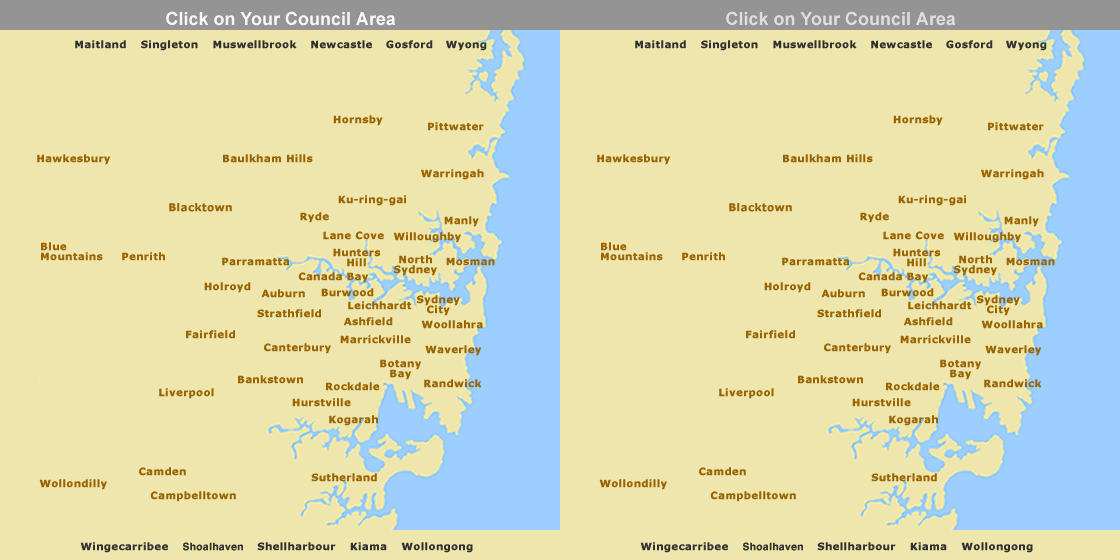
DECLARED High risk termite areas include - Anna
Bay - Boat
Harbour - Bobs
Farm - Brandy
Hill - Campvale - Corlette - Cromartys
Bay - Dutchmans
Bay - Eagleton - East
Seaham - Fenninghams
Island - Fingal
Bay - Fishermans
Bay - Fullerton
Cove - Gan
Gan - Halifax
Park - Heatherbrae - Hinton - Irrawang - Kangaroo
Point - Kooindah - Mallabula - Medowie - Morna
Point - Motto
Farm - Muree
Chase - Nelson
Bay - Nelsons
Plains - One
Mile - Oyster
Cove - Port
Stephens - Raymond
Terrace - Salamander
Bay - Salt
Ash - Sandy
Point - Seaham - Shoal
Bay - Soldiers
Point - Tanilba
Bay - Taylors
Beach - Tomago - Tomaree - Wallalong - Williamtown - Woodville and
neighbouring areas.
The problem is getting worse: Severe termite
damage to Australian homes is on the increase since the removal in 1995 of
long lasting soil barrier chemicals; the more common use of softwood
building and other landscaping timbers that termites find irresistible,
such as, timber mulch and railway sleepers.
Other factors that promote rapid termite colony
development - automatic watering systems - timber landscaping and
maintenance - and building
designs that allow hidden termite entry into a building.
|
DESTRUCTIVE TERMITE
RISK ASSESSMENT *
* Based upon CSIRO data and APCA national
survey |
Termites live in the
ground
and can
eat your house down
Termites are known to destroy the wall and roofing timbers of a home
within 3 months of construction.
Termites cause more damage to homes in Australia than fire, floods,
storms and tempest, combined.
Termites occur throughout NSW, with a high incidence of attack in
virtually all urban areas.
CONSUMER NOTE: The standard Home and
Building Insurance Policy will NOT cover the repair costs of termite
infested structural and decorative timbers. |
Fascinating biology: Australian subterranean termites
evolved more than 250 million year ago. They inhabited Australia
long before flowering plants. Their survival success depends on living in
a protective underground environment. In some species, their colony nest
has a hardened shell, exposed above ground level. In most destructive
species in NSW their nest is totally out of sight, below ground level.
Worker termites build mud-tubes over hard objects. The tubes or
"galleries" are made up of partly digested timber and mud excrete, and is
moist if currently in active use. The termites keep it's colony nest and
galleries at 25 to 35oC with high humidity. If they are exposed to light or
open air they will dehydrate and die. Subterranean termites live in constant
darkness, excepting for the annual summer swarms of the winged
reproductives to set up new nests in the surrounding area.
A
million termites in the nest: In some destructive species, a
termite colony nest may contain more than a million termites, consisting
of a queen, king, young immature nymphs, workers, soldiers and winged
reproductives (called alates). Termites are delicate, soft bodied and small in
stature, about half the size of match-head, but are highly
efficient timber recyclers - Mother Nature's best
builders.
The
worker termites are blind and forage in a largely random
criss-cross fashion looking for new timber food sources. However, they may
encounter and follow moisture zones and trail along solid objects, such
as, the concrete slab edge of your home. The soldiers accompany the
workers in their constant search for new timber food sources. If you find
termites active in timber framing, it is the soldiers that rush out to
defend the workers.
Experience counts: It takes many years of termite
control field-work experience to get a proper understanding of the habits
of the destructive termite species habits and their likely foraging areas
in a variety of building types and environmental circumstances.
|
Look who's coming to dinner
... and whose home on the
menu ?
Picture on your left shows a FUMAPEST termite
inspector examining a large subsidiary nest, termites built inside
the dining room wall cavity of a home.
Above ground nests Termites often build such above-ground nests provided there is a
reliable moisture source, such as, from faulty plumbing, leaking
pipes, shower recess, guttering, broken roof tiles and the like.
Mud shelter tubes - picture on left shows a termite mud shelter tube built over a brick foundation wall to the flooring timbers in the sub-floor of a home.
Termites are very secretive and will often enter
a building through areas inaccessible to inspection, such as, via
on-ground patios, cracks or expansion joints or around concrete slab
flooring, particularly if the slab edge is obscured by pathways or
garden beds.
Tiny entry points Termites can pass through a 2 mm crack in concrete slab
on-ground flooring and eat through rubber compound
between adjoining concrete slabs. Termites often travel under parquetry and other floor tiles to get to the wall
and roofing framing timbers. | |
|